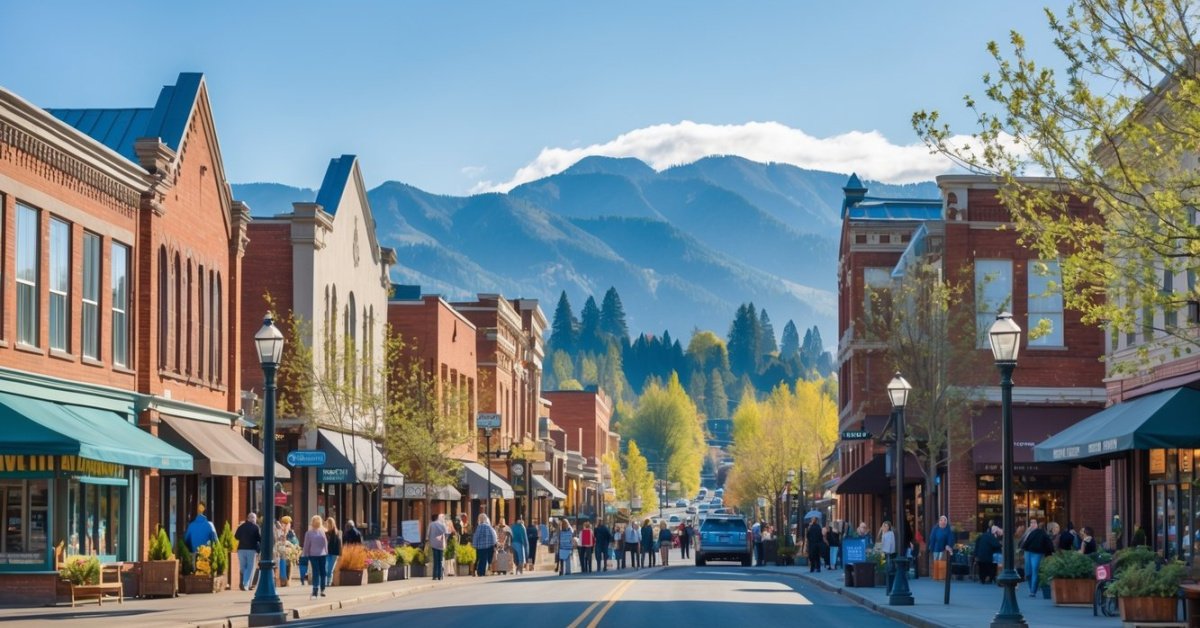
When I think about the wild and rugged landscapes of the Pacific Northwest, Oregon always comes to mind. Its journey from a vast, untamed territory to a proud state is packed with adventure, ambition, and plenty of twists along the way. I’m fascinated by how people from all walks of life were drawn to this corner of the country, each chasing dreams of opportunity and a new beginning.
Exploring Oregon’s path to statehood feels like stepping into a story where pioneers, politicians, and indigenous communities all played a part. There’s something inspiring about how determination and hope shaped the region’s identity. I can’t wait to share how Oregon transformed from a disputed frontier into one of the United States’ most unique states.
Early History of the Oregon Territory
Early stories from Oregon Territory show how cultures, landscapes, and ambitions shaped my home state. My years exploring Oregon help me give a close-up look at the first people here and the contest for control that followed.
Native Peoples and Early Settlers
Native tribes shaped Oregon Territory before any outsiders arrived. Chinook, Kalapuya, Nez Perce, and Umatilla nations, for example, built trade routes and seasonal settlements all across river valleys and forests. I see traces of their culture in place names and ancient sites found from the Columbia River to the Willamette Valley. When fur traders from the Hudson’s Bay Company set up Fort Vancouver by the 1820s, these native networks made trading possible. French Canadian trappers and missionaries also arrived, building early settlements like French Prairie in the north Willamette region. Early farming communities grew where river access supported crops and trade.
Competing Claims and Exploration
Competing claims and new maps defined Oregon in the early 1800s. Both the British and the Americans, for example, explored and mapped routes like the Columbia River. Lewis and Clark’s Corps of Discovery reached the Pacific at Fort Clatsop in 1805, their journals recording forests and wildlife I still find on my hikes today. British explorers like David Thompson and fur trade companies built forts and trade posts through the interior. Four nations—the United States, Britain, Russia, and Spain—claimed overlapping rights by the 1810s, creating long disputes in treaty talks. The Oregon Trail opened in the 1840s, and thousands of American settlers, seeking farmland and timber, moved through the valleys and forests that I call home. This rush changed the land’s control and set the stage for Oregon’s future boundaries.
The Oregon Trail and Westward Expansion
I’ve studied how the Oregon Trail shaped my home state’s destiny. The route, which spanned over 2,000 miles from Missouri to Oregon City, became central to westward expansion and directly influenced Oregon’s path to statehood. Every time I walk parts of its remains, I’m reminded of the journey’s difficulty and hope.
Life on the Oregon Trail
Life on the Oregon Trail challenged even the toughest travelers. Families packed wagons with essentials—flour, bacon, and rifles—often leaving heirlooms behind when space or weight ran short. River crossings along the Snake or Platte caused loss of livestock and sometimes lives, according to Oregon Historical Society accounts. Cholera and dysentery spread in crowded camps, while exhaustion from daily 15-mile treks pushed pioneers’ limits. Wagon trains relied on collaboration; experienced guides like Stephen Meek occasionally led groups, but wrong turns risked starvation or exposure. By 1850, an estimated 50,000 people had crossed, with grave markers and wagon ruts still visible today as reminders of the ordeal.
Impact on Settlement Patterns
The Oregon Trail directly influenced settlement patterns in the Willamette Valley and eastern Oregon. Most migrants sought fertile farmland, encouraged by the Donation Land Claim Act of 1850, which offered 320 acres per married couple. Settlements like Portland, The Dalles, and Oregon City sprouted along natural river crossings and trail endpoints, growing into regional trade hubs. Indigenous lands, once occupied by tribes such as the Kalapuya and Cayuse, lost populations due to introduced diseases and forced relocations, which reshaped the region’s demographic map. Homestead claims and the grid system of land division replaced earlier patterns of native seasonal camps and fishing villages. My own research in local archives often uncovers old family journals, revealing how pioneer networks shaped town borders and community identities that still define Oregon today.
Political Struggles and Territorial Governance
Political struggles and territorial governance shaped Oregon’s path, marking every stage with debate and compromise. I see evidence of these turning points across the state, from old meeting houses in Oregon City to the border markers in eastern Oregon.
Joint Occupation with Britain
Joint occupation with Britain, agreed upon in 1818, let both American and British citizens settle in the Oregon Country, spanning today’s Oregon, Washington, Idaho, and parts of Montana and Wyoming. I’ve seen historic sites like Fort Vancouver and Fort Astoria that highlight how fur trading posts coexisted—sometimes uneasily. Tensions surfaced in nearly every community, with the Hudson’s Bay Company influencing trade, law, and alliances, while American settlers established towns such as Champoeg and The Dalles. The Oregon boundary dispute lingered for decades until the 1846 Oregon Treaty set today’s border at the 49th parallel, shifting control to the United States.
Formation of Territorial Government
Formation of a local government started before Congress officially recognized the Oregon Territory. Local pioneers, mostly in the Willamette Valley, met at Champoeg in 1843 to establish a provisional government, creating laws, electing officials, and setting up basic courts. I’ve walked the Champoeg State Heritage Area, where these early debates shaped Oregon’s first codes and divided the region into districts. Congress approved the Oregon Territory in 1848, appointing a territorial governor and legislature based in Oregon City. Their authority stretched over a vast region, but conflicts flared among settlers, with questions about land rights, representation, and relations with Native tribes fueling most disputes. Every old county courthouse I visit still echoes some of these early power struggles.
Steps Toward Statehood
Oregon’s journey from territory to state unfolded through heated debates and landmark legislation. Each step shaped the character of the state I know so well today.
Debates Over Slavery and Boundaries
Early Oregon politics revolved around the issues of slavery and borders. Settlers arriving via the Oregon Trail pushed for laws reflecting their own ideals. In 1844, voters at Champoeg banned slavery but also enacted Black exclusion laws (Oregon State Archives), a contradiction revealing deep tensions. Oregon’s voters later confirmed these exclusions in the 1857 constitution, making Oregon the only state admitted with such a provision.
Boundary discussions centered on the region’s limits. Many settlers wanted the territory to stretch from the Rockies to the Pacific, but the 1846 Oregon Treaty set the northern border at the 49th parallel, ending the dispute with Britain. The southern boundary fell at the 42nd parallel north, matching today’s border with California. These decisions determined which communities and resources would shape Oregon’s statehood.
The Oregon Enabling Act
The Oregon Enabling Act of 1859 authorized Oregonians to draft a state constitution and prepare for admission. Congress required a clear population count, ensuring Oregon met the threshold set for statehood (U.S. Statutes at Large, ch. 33, 11 Stat. 383). Locals convened at Salem in 1857, where delegates wrote a constitution reflecting both progressive and exclusionary values. Voters widely approved the document, which banned slavery but excluded Black residents and restricted suffrage.
Oregon entered the Union as the 33rd state on February 14, 1859. This legislative milestone brought federal representation and started Oregon’s official journey as a state, shaping political and civic life across every corner of my home.
Achieving Statehood
Achieving statehood marked a turning point in Oregon’s story, defined by passionate debates and rapid change. I’ve spent years tracing the details of this era across historic sites and archives around the state.
Admission to the Union
Admission to the Union for Oregon came on February 14, 1859, after decades of negotiation and political organizing. Leaders in communities like Salem and Oregon City drafted the state’s constitution in 1857, aiming to address national issues like slavery and local concerns over land rights. Congress required a constitution as the price of admission. Oregonians, voting in late 1857, approved a constitution that banned slavery but included exclusionary laws against Black residents.
The table below details key dates and decisions:
| Event | Date | Details |
|---|---|---|
| Constitutional Convention | August–September 1857 | Delegates from across Oregon met in Salem |
| Constitution Approved by Voters | November 9, 1857 | 7,195 in favor; 3,195 against |
| Admission to the Union | February 14, 1859 | Oregon becomes 33rd state |
Lasting Impact on the Region
Lasting impact on the region from statehood shaped everything from how towns like Eugene grew to who called Oregon home. Statehood drove more migration from eastern states, increasing the number of sawmills, schools, and new farms in the Willamette Valley. Laws created then, including homestead acts and restrictions, guided settlement patterns that still define urban and rural areas today.
I see reminders all over Oregon—historic courthouses, pioneer cemetery plots, Main Streets patterned after 19th-century surveys. Debates from that era left a distinct political legacy. For example, Oregon’s tradition of public land access and progressive reforms, including early women’s suffrage movements and environmental protections, grew out of values set during statehood debates. Tensions surrounding race and inclusion echo today, as Oregon’s history of exclusion laws remains an important topic in local discussions.
Conclusion
Reflecting on Oregon’s journey to statehood always leaves me inspired by the courage and vision that shaped this beautiful region. Every trail marker and historic building tells a story of people who dared to dream of something greater.
I’m reminded that Oregon’s identity is still evolving as we continue to honor our past while shaping our future. There’s a sense of resilience and community here that I truly admire and I’m grateful to share in the ongoing story of this remarkable state.